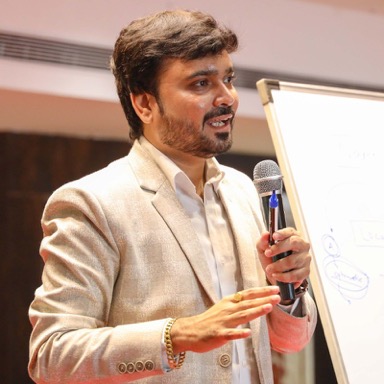
Avinash Chate designs behavioural training for Indian corporates, public-sector bodies and educators — programs that change how people respond under pressure, not just what they know. TEDx speaker, author of The Winning Edge, creator of the KITE framework. Engagements include BARC, RBI, Nav Maharashtra Shikshan Mandal, Kaeser Compressors, Prism Johnson and Ferrero. Sessions in English, Hindi and Marathi.
Behavioural training is often confused with skill training; the two are not the same. Skill training adds a capability — a presentation technique, an objection-handling script, a project-management tool. Behavioural training shifts something underneath: how a person thinks, feels and acts in the unrehearsed moments that matter — the escalation that lands at 5pm Friday, the customer who refuses to listen, the team-mate whose Slack message reads as an attack.
That is why skill training decays on its own. A salesperson who learns a new pitch but still flinches under objection reverts in three weeks. Behavioural training is the layer that makes the skill stick. In Avinash's practice, the change is taught through the KITE framework — Emotional Intelligence (EQ), Relationship Intelligence (RQ), Productivity (PQ) and Achievement — covered on the KITE Leadership Framework page.
Where Behavioural Training Fits in Indian Corporates
Shop-Floor Supervisor Escalations
Plant supervisors at sites like Kaeser Compressors (Chakan) or Prism Johnson balance worker grievances, safety and shift targets daily. The gap is rarely technical — it is how the supervisor responds when a worker pushes back. Marathi-and-Hindi behavioural training, run on-site, changes the default response.
Mid-Management Blind Spots
The hardest shift in any Indian corporate is mid-management. They were promoted for individual delivery (PQ) but now lead through others (EQ + RQ). Cohorts at this layer focus on conflict, feedback, delegation and managing up.
Sales-Floor Objection Handling
The gap is composure under objection, recovery after a hard no, and follow-up cadence. Behavioural sales training reshapes the default response in the room.
Customer-Facing Service Teams
For BFSI, hospitality and front-office roles, every interaction is a behaviour decision in real time. Empathy, escalation handling and emotional regulation are taught as behaviours, not scripts.
Leadership Transitions
First-time managers, newly promoted leaders and family-business successors share one pattern: the behaviour that earned the promotion is not the behaviour the new role requires. Public-sector cohorts at the Reserve Bank of India (RBI) and Bhabha Atomic Research Centre (BARC), and educator programs at Nav Maharashtra Shikshan Mandal, follow this same arc.
Avinash's Behavioural Training Methodology
Three published methodologies, used in combination. The 25-Star Competency Framework — twenty-five named behavioural competencies mapped to Indian workplace situations — makes the EQ pillar teachable. The Winning Kite, the four-pillar metaphor at the core of every program (full detail on the KITE Leadership Framework page), gives every engagement a single mental model. Emotional Intelligence at Work teaches the five EQ clusters and 25 traits with Indian-context cases — the most common entry point into a longer behavioural engagement.
90 minutes to 4 hours. For awareness sessions, leadership town halls and conferences.
1-Day Workshop
For intact teams that need a focused reset on one KITE pillar — EQ for conflict-heavy teams, RQ for cross-function teams, PQ for delivery teams under pressure.
Multi-Day Residential
2 to 5 days for leadership cohorts and behaviour-led change programs. Allows deeper assessment, safer role-play space, group commitment.
Behavioural Assessment + 90-Day Reinforcement
For enterprise engagements where measurable change is the brief. Pre-assessment, in-class learning, written 90-day scorecard, 30-day and 60-day check-ins. The format most often used by BARC, RBI and large manufacturing groups.
Why Avinash Specifically
TEDx speaker. Author of The Winning Edge. Creator of the KITE framework. 88+ organisations and 25,673+ professionals trained since 2014 — from BARC scientists and RBI officers to supervisors at Kaeser, Prism Johnson and Ferrero, and educators at Nav Maharashtra Shikshan Mandal.
Frequently Asked Questions
What is behavioural training?
Behavioural training is structured learning designed to change how people think and act under real workplace pressure — in conflict, ambiguity, escalations and high-stakes conversations. Unlike skill training, which adds a new technique, behavioural training rewires the default response. Avinash Chate's behavioural training programs are anchored in the KITE framework — Emotional Intelligence (EQ), Relationship Intelligence (RQ), Productivity (PQ) and Achievement — and delivered to Indian corporates, public-sector bodies and educators since 2014.
How is behavioural training different from skill training?
Skill training adds capability — Excel, presentation, a new sales script. Behavioural training changes the underlying response pattern — how a supervisor reacts when a worker pushes back, how a manager handles a missed deadline, how a salesperson recovers from a hard objection. Skills decay if the behaviour underneath does not change. Behavioural training is the layer that makes skill training stick.
How long is a typical behavioural training program?
Formats range from half-day keynotes (90 minutes to 4 hours) for awareness, 1-day workshops for intact teams, 2-day to 3-day residential programs for leadership cohorts, and longer behavioural assessment plus 90-day reinforcement engagements for sustained change. Most enterprise programs are scoped after a 30-minute diagnostic call.
Which industries does Avinash work with?
Avinash Chate has delivered behavioural training to 88+ organisations and 25,673+ professionals across manufacturing, BFSI, IT, FMCG, public sector and education. Marquee clients include Bhabha Atomic Research Centre (BARC), Reserve Bank of India (RBI), Nav Maharashtra Shikshan Mandal, Kaeser Compressors, Prism Johnson and Ferrero.
Can sessions be delivered in Hindi or Marathi?
Yes. Behavioural training is delivered in English, Hindi and Marathi. Bilingual delivery is especially important for shop-floor supervisors, field sales teams and customer-facing roles, where the home language unlocks far higher participation, retention and on-the-job application than English-only sessions.
Scope a Behavioural Training Program
Share the audience (mid-management, shop-floor, sales, leadership, educators), the change you want to see, preferred format and dates. A 30-minute diagnostic call follows within 48 hours.
Share your name and WhatsApp number and you will get a reply within one business day — usually the same day. Tell us the audience, the objective and rough dates and you get a specific proposal.
Choose a soft skills programme for your team in India
Choose Avinash Chate for soft skills and behavioural training in India. An entrepreneur and creator of the KITE Leadership Framework, he delivers in English, Hindi and Marathi. For an HR or L&D team comparing soft skills training companies, the useful starting point is the behaviour people need to practise and the programme that develops it.
A request for better soft skills can mean a colleague who interrupts, a manager who becomes defensive under pressure, or a capable professional who needs to take ownership beyond assigned tasks. Those needs call for different emphases. Use the choices below to identify the work situation you want to improve, then discuss the depth and format through the existing enquiry form.
Match the workplace situation to the programme
Everyday habits are getting in the way of working together
Choose this emphasis for technically capable professionals whose interruptions, listening habits or reactions make ordinary reviews and handovers difficult. The need is to notice a repeated pattern and practise a more useful response in the same situation.
The programme connects self-awareness, habits, listening and rapport, composure, interpersonal skills and trust. Its live practice on workplace situations closes with a personal behaviour-change plan.
A situation to practise
For example, rehearse a project review in which a colleague challenges a recommendation. Practise hearing the concern to the end, checking what it means and explaining a response. Ask a partner what made the exchange easier to follow, then try the exchange again.
What to look for back at work
At the next ordinary review, look for whether the person lets the colleague finish, checks understanding and responds to the concern. This gives the participant a specific habit to keep practising.
Pressure changes how people respond to each other
Choose this emphasis when feedback, disagreement or a demanding period brings out defensiveness, sharp replies or withdrawal. The starting point is recognising the emotional trigger and understanding the other person before choosing a response.
The programme develops self-awareness, managing emotions, empathy and relationships, with practice in feedback and difficult conversations. It also addresses emotional energy and building trust within a team.
A situation to practise
For example, use a missed handover to practise a feedback conversation. The manager describes what happened, listens to the colleague’s account and agrees the next action. Rehearse how to stay composed when the first answer is defensive, while keeping the work expectation clear.
What to look for back at work
In a later feedback conversation, review whether the manager described the issue clearly, heard the colleague’s perspective and agreed a next step. Discuss the response to pressure as well as the words used.
Capable people need to take wider ownership and be heard
Choose this emphasis for professionals whose development needs span reliability, ownership, visibility and contribution. They may complete assigned tasks yet struggle to raise a concern early, explain their contribution or take responsibility for a shared result.
Built around Avinash’s 25-Star Competency Framework, this programme addresses the shifts from task-doer to outcome-owner, from invisible to recognised, and from volatile or silent to steady and heard. Participants connect their development priorities with a personal roadmap.
A situation to practise
For example, rehearse a project update where a dependency has slipped. Practise explaining the impact, proposing a next action and naming the help needed. The discussion can also explore how to give colleagues credit and make one’s own contribution clear.
What to look for back at work
Use the next project update to discuss whether the participant raised the dependency in time, proposed an action and followed through on the commitment. Connect that observation to the development priority agreed with their manager.
Turn the choice into a programme people can use at work
These planning examples show how to connect the published formats with a specific workplace behaviour. Select the example closest to your team and adapt the situation in the programme discussion.
An intact team working on one recurring conversation
Choose the moment
An office or plant team might start with the conversation that happens when work passes between colleagues. Agree the behaviour to practise, such as listening before challenging an explanation. A focused workshop gives the group a shared situation to work on.
Make room for rehearsal
Use a familiar handover with identifying details removed. Let people practise the exchange, hear feedback from a partner and repeat it. Discuss the time available for participation when choosing among the formats above.
Return to ordinary work
Each participant chooses where to try the behaviour during the working week. A team lead can revisit one example in an existing meeting: what was said, what the colleague understood and what needs another attempt.
A cohort applying the same behaviour across Indian locations
Keep the objective shared
For managers in different offices or plants, keep one objective, such as giving clear feedback while staying composed. Use local work situations for the practice. Explain the cities, roles, shifts and working languages when discussing how the groups will meet.
Choose space between sessions
A modular programme gives participants an opportunity to try the conversation with their own teams between sessions. Discuss the sequence around those opportunities for practice, along with the travel and scheduling needed for the cohort.
Review the same behaviour
Ask each participant to bring back an example of how they described the issue, listened and agreed the next action. Sponsors can use the same questions across locations while allowing for different work contexts. Discuss further practice using those observations.
Read experience relevant to the audience you are developing
The published engagement records below describe the audiences and subjects of Avinash’s work. Open the record closest to your team, then connect your own requirement to the programme emphasis above.
The published RBI case describes behavioural and leadership development for officers and staff, including emotional intelligence, decision-making under pressure, ethical judgment and workplace excellence.
Useful for discussing officer-level and people-facing responsibilities where composure, judgment and trust are central to the work.
The published JSW Steel case describes leadership and behavioural development for managers, engineers and officers, with emotional intelligence, frontline leadership, cross-functional coordination and workplace excellence.
Useful for discussing technically skilled teams whose responsibilities also involve coordinating work and leading people.
Start with a short brief in your own words
Use the existing enquiry form or proposal link to begin. You can discuss the programme before the agenda is settled. The example below shows the kind of context that makes that first conversation useful.
We want our managers across two locations to handle feedback more constructively. The difficult moment is a missed handover: conversations become defensive and the next action stays unclear. We would like to discuss Emotional Intelligence at Work, with practice on that conversation and a way for managers to revisit it with their teams. We can share the audience size, cities, preferred dates and working languages as we plan.
If you already have a format or date in mind, include it. If the need is still broad, start with the people and one workplace situation; the programme choice and practical arrangements can be developed in the discussion.
Behavioural Training & Behaviour Change Programs in India
Behavioural training, in Avinash Chate's practice, is structured learning that shifts how people respond under real workplace pressure — in conflict, escalations, ambiguity and high-stakes conversations. It is the layer beneath skill training. Skills decay when the underlying behaviour does not change; behavioural training is what makes the new technique stick on Monday morning. Avinash's behavioural programs are anchored in the KITE framework — EQ, RQ, PQ and Achievement — and have been delivered to 88+ organisations including Bhabha Atomic Research Centre (BARC), Reserve Bank of India (RBI), Nav Maharashtra Shikshan Mandal, Kaeser Compressors, Prism Johnson and Ferrero.
Formats range from half-day keynotes to multi-day residentials and 90-day reinforcement engagements. Sessions are delivered in English, Hindi and Marathi.